Journalmedia 03 00034 g0 a1 550
Vine
Kremlin Disinformation Discourse: Media Coverage of the Plane Hijack by Belarus on 23 May 2021
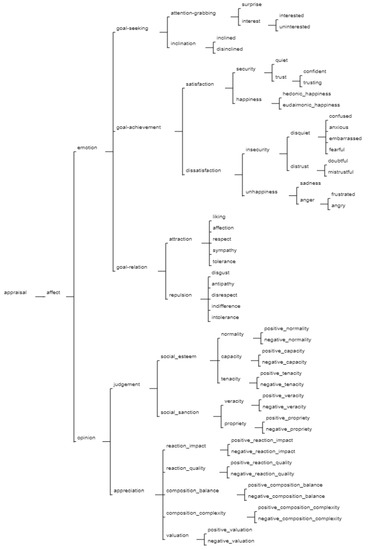
This paper approaches Kremlin disinformation from a theoretical perspective encompassing key tenets of media discourse analysis, Systemic Functional Linguistics, the Appraisal theory, and research on propaganda and disinformation. On 23 May 2021, the Ryanair flight 4978 flying from Athens to Vilnius was intercepted by a Belarusian warplane and forced to land in Minsk. Afterward, a Belarusian dissident journalist, Roman Protasevich, was detained. This paper aims to contribute to Kremlin disinformation research with insights from Systemic Functional Linguistics and the Appraisal theory. The Appraisal theory is used to discern the specific disinformation strategy employed in compromised media publications covering the forced landing. The main disinformation strategy observed in the dataset revolves around deflecting the targets of moral and axiological evaluation and undermining audience’s sense of truthfulness.
https://sciprofiles.com/profile/2279071
Kremlin Disinformation Discourse: Media Coverage of the Plane Hijack by Belarus on 23 May 2021
This paper approaches Kremlin disinformation from a theoretical perspective encompassing key tenets of media discourse analysis, Systemic Functional Linguistics, the Appraisal theory, and research on propaganda and disinformation. On 23 May 2021, the Ryanair flight 4978 flying from Athens to Vilnius was intercepted by a Belarusian warplane and forced to land in Minsk. Afterward, a Belarusian dissident journalist, Roman Protasevich, was detained. This paper aims to contribute to Kremlin disinformation research with insights from Systemic Functional Linguistics and the Appraisal theory. The Appraisal theory is used to discern the specific disinformation strategy employed in compromised media publications covering the forced landing. The main disinformation strategy observed in the dataset revolves around deflecting the targets of moral and axiological evaluation and undermining audience’s sense of truthfulness.
Kremlin Disinformation Discourse: Media Coverage of the Plane Hijack by Belarus on 23 May 2021
This paper approaches Kremlin disinformation from a theoretical perspective encompassing key tenets of media discourse analysis, Systemic Functional Linguistics, the Appraisal theory, and research on propaganda and disinformation. On 23 May 2021, the Ryanair flight 4978 flying from Athens to Vilnius was intercepted by a Belarusian warplane and forced to land in Minsk. Afterward, a Belarusian dissident journalist, Roman Protasevich, was detained. This paper aims to contribute to Kremlin disinformation research with insights from Systemic Functional Linguistics and the Appraisal theory. The Appraisal theory is used to discern the specific disinformation strategy employed in compromised media publications covering the forced landing. The main disinformation strategy observed in the dataset revolves around deflecting the targets of moral and axiological evaluation and undermining audience’s sense of truthfulness.
Pdf
Journalmedia 03 00035 g007 550
Journalmedia 03 00035 g006 550
Journalmedia 03 00035 g005 550
Journalmedia 03 00035 g004 550
Journalmedia 03 00035 g003 550
Journalmedia 03 00035 g002 550
Journalmedia 03 00035 g001 550
Journalism and Media
Journalism and Media, an international, peer-reviewed Open Access journal.
Artificial Intelligence and Journalism: Current Situation and Expectations in the Portuguese Sports Media
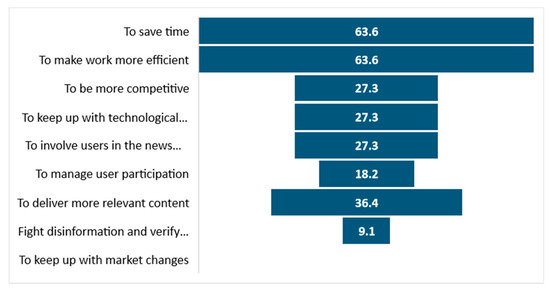
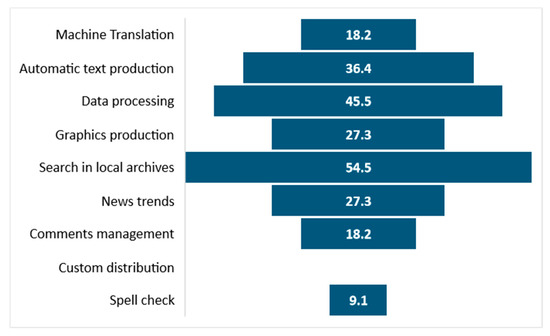
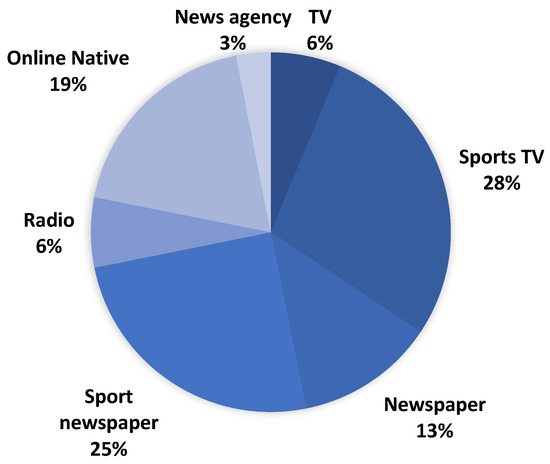
With an important presence in various sectors of activity, Artificial Intelligence has also reached journalism, mostly in the field of natural-language processing, in the detection of informational trends or in the automatic production of texts. The fact that sport is one of the first to test AI is not a coincidence: it is a subject in which there is a lot of information online and where data is essential, so it is simpler to resort to natural language processing to transform them in texts with little or no human intervention; this work sought to understand if Artificial Intelligence is already used in Portuguese sports media, but also in mainstream media sports sections, whether they are newspapers, radios, TVs or online natives. A survey was sent only to decision-makers, that is, editors and coordinators. The study seeks to understand to what extent journalists expect AI to help journalism, what are the greatest difficulties of its use and what threats it represents. We can conclude that Portuguese sports journalism is aware of the potential of AI, although for now it is not used in newsrooms due to economic and professional constraints.
https://sciprofiles.com/profile/1889185
Artificial Intelligence and Journalism: Current Situation and Expectations in the Portuguese Sports Media
With an important presence in various sectors of activity, Artificial Intelligence has also reached journalism, mostly in the field of natural-language processing, in the detection of informational trends or in the automatic production of texts. The fact that sport is one of the first to test AI is not a coincidence: it is a subject in which there is a lot of information online and where data is essential, so it is simpler to resort to natural language processing to transform them in texts with little or no human intervention; this work sought to understand if Artificial Intelligence is already used in Portuguese sports media, but also in mainstream media sports sections, whether they are newspapers, radios, TVs or online natives. A survey was sent only to decision-makers, that is, editors and coordinators. The study seeks to understand to what extent journalists expect AI to help journalism, what are the greatest difficulties of its use and what threats it represents. We can conclude that Portuguese sports journalism is aware of the potential of AI, although for now it is not used in newsrooms due to economic and professional constraints.
Artificial Intelligence and Journalism: Current Situation and Expectations in the Portuguese Sports Media
With an important presence in various sectors of activity, Artificial Intelligence has also reached journalism, mostly in the field of natural-language processing, in the detection of informational trends or in the automatic production of texts. The fact that sport is one of the first to test AI is not a coincidence: it is a subject in which there is a lot of information online and where data is essential, so it is simpler to resort to natural language processing to transform them in texts with little or no human intervention; this work sought to understand if Artificial Intelligence is already used in Portuguese sports media, but also in mainstream media sports sections, whether they are newspapers, radios, TVs or online natives. A survey was sent only to decision-makers, that is, editors and coordinators. The study seeks to understand to what extent journalists expect AI to help journalism, what are the greatest difficulties of its use and what threats it represents. We can conclude that Portuguese sports journalism is aware of the potential of AI, although for now it is not used in newsrooms due to economic and professional constraints.
Pdf
Journalmedia 03 00036 g014 550
Journalmedia 03 00036 g013 550
Journalmedia 03 00036 g012 550
Journalmedia 03 00036 g011 550
Journalmedia 03 00036 g010 550
Journalmedia 03 00036 g009 550
Journalmedia 03 00036 g008 550
Journalmedia 03 00036 g007 550
Journalmedia 03 00036 g006 550
Journalmedia 03 00036 g005 550
Journalmedia 03 00036 g004 550