Vine

Vine

12257 bookmarks
Custom sorting
Journalism and Media
Journalism and Media, an international, peer-reviewed Open Access journal.
Journalism and Media
Sharenting of Portuguese Male and Female Celebrities on Instagram
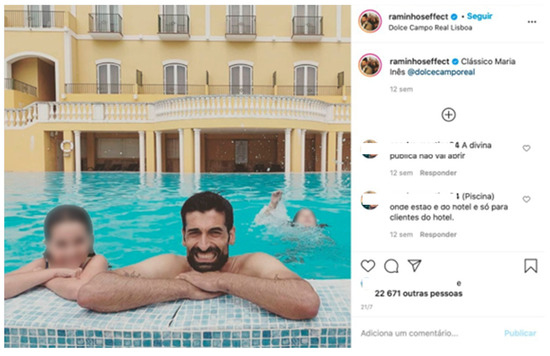
In a contemporary era, strongly characterized by digital omnipresence, celebrities share, via their social media accounts, experiences related to parenthood or, in other words, adopt sharenting practices. This article focuses on the visual and textual representation of the children of six Portuguese female and male celebrities active on Instagram in 2020. The study aimed to explore whether the narratives and content strategies conveyed by celebrities about their children are integrated into authentic and advertising content, and how these vary according to the celebrity’s gender. A quantitative and qualitative content analysis was carried out, on a corpus of 1116 pieces of content related to children, in the four Instagram formats—Post, Instastory, IGTV, and Reels. The results showed that children are mostly depicted in spontaneous moments of everyday life that are often perceived as intimate and exclusive moments. While content explicitly identifying advertising or partnerships is infrequent, in many of these contents there was some sort of commercial presence, e.g., through brands identified in children’s content. There were also substantial differences in the themes of the content posted by mothers, in contrast to fathers. These differences were especially evident, on the one hand, regarding the categories of the identified brands—male celebrities are associated with outdoor activities and tend to fall into the categories “Leisure” and “Food and Drinks”, while the brand categories most often identified by female celebrities are associated with “Clothing and Footwear” and “Childcare and Health”, categories that are related to the daily care of children. On the other hand, as for the speech, we found that not only the gender but also the celebrity’s persona is relevant when considering the sharenting they do. Generally, the study found that celebrity sharenting is associated with demonstrations of affection towards children, regardless of gender, a fact that highlights the importance of family ties and parental values in a pandemic context.
Sharenting of Portuguese Male and Female Celebrities on Instagram
In a contemporary era, strongly characterized by digital omnipresence, celebrities share, via their social media accounts, experiences related to parenthood or, in other words, adopt sharenting practices. This article focuses on the visual and textual representation of the children of six Portuguese female and male celebrities active on Instagram in 2020. The study aimed to explore whether the narratives and content strategies conveyed by celebrities about their children are integrated into authentic and advertising content, and how these vary according to the celebrity’s gender. A quantitative and qualitative content analysis was carried out, on a corpus of 1116 pieces of content related to children, in the four Instagram formats—Post, Instastory, IGTV, and Reels. The results showed that children are mostly depicted in spontaneous moments of everyday life that are often perceived as intimate and exclusive moments. While content explicitly identifying advertising or partnerships is infrequent, in many of these contents there was some sort of commercial presence, e.g., through brands identified in children’s content. There were also substantial differences in the themes of the content posted by mothers, in contrast to fathers. These differences were especially evident, on the one hand, regarding the categories of the identified brands—male celebrities are associated with outdoor activities and tend to fall into the categories “Leisure” and “Food and Drinks”, while the brand categories most often identified by female celebrities are associated with “Clothing and Footwear” and “Childcare and Health”, categories that are related to the daily care of children. On the other hand, as for the speech, we found that not only the gender but also the celebrity’s persona is relevant when considering the sharenting they do. Generally, the study found that celebrity sharenting is associated with demonstrations of affection towards children, regardless of gender, a fact that highlights the importance of family ties and parental values in a pandemic context.
Sharenting of Portuguese Male and Female Celebrities on Instagram
In a contemporary era, strongly characterized by digital omnipresence, celebrities share, via their social media accounts, experiences related to parenthood or, in other words, adopt sharenting practices. This article focuses on the visual and textual representation of the children of six Portuguese female and male celebrities active on Instagram in 2020. The study aimed to explore whether the narratives and content strategies conveyed by celebrities about their children are integrated into authentic and advertising content, and how these vary according to the celebrity’s gender. A quantitative and qualitative content analysis was carried out, on a corpus of 1116 pieces of content related to children, in the four Instagram formats—Post, Instastory, IGTV, and Reels. The results showed that children are mostly depicted in spontaneous moments of everyday life that are often perceived as intimate and exclusive moments. While content explicitly identifying advertising or partnerships is infrequent, in many of these contents there was some sort of commercial presence, e.g., through brands identified in children’s content. There were also substantial differences in the themes of the content posted by mothers, in contrast to fathers. These differences were especially evident, on the one hand, regarding the categories of the identified brands—male celebrities are associated with outdoor activities and tend to fall into the categories “Leisure” and “Food and Drinks”, while the brand categories most often identified by female celebrities are associated with “Clothing and Footwear” and “Childcare and Health”, categories that are related to the daily care of children. On the other hand, as for the speech, we found that not only the gender but also the celebrity’s persona is relevant when considering the sharenting they do. Generally, the study found that celebrity sharenting is associated with demonstrations of affection towards children, regardless of gender, a fact that highlights the importance of family ties and parental values in a pandemic context.
Sharenting of Portuguese Male and Female Celebrities on Instagram
When News Topics Annoy—Exploring Issue Fatigue and Subsequent Information Avoidance and Extended Coping Strategies
This paper scrutinizes the phenomenon of issue fatigue and its consequences. Issue fatigue results from overexposure to a news topic that has been on the media’s agenda for an extended period of time. Fatigued recipients become annoyed, and no longer wish to be exposed to the topic. Based on the findings of an explorative qualitative study, a quantitative online survey was conducted in Germany, Mexico, and Pakistan (N = 481). Using cluster analysis, we identified an emotional and a cognitive type of issue fatigue, and investigated how these types react. Both types of fatigued recipients avoided further news about the respective issue in traditional news media (= information avoidance). Differences were observed concerning the strategies to handle fatigue (= coping strategies): recipients of the emotional type posted about their fatigue in social media; recipients of the cognitive type turned to information in sources other than the mainstream news. Taking into account country-specific differences, we concluded that, generally, issue fatigue—via information avoidance—results in an uninformed citizenry. This can be a hurdle for the functioning of an established democracy or for the success of democratic transitions. Posting about issue fatigue, which was more frequent in Mexico and Pakistan, might ‘infect’ others, and intensify problems resulting from issue fatigue. Turning to alternative sources can be either beneficial or problematic for the development of a well-informed citizenry, depending on whether alternative sources provide reliable and truthful information.
When News Topics Annoy—Exploring Issue Fatigue and Subsequent Information Avoidance and Extended Coping Strategies
This paper scrutinizes the phenomenon of issue fatigue and its consequences. Issue fatigue results from overexposure to a news topic that has been on the media’s agenda for an extended period of time. Fatigued recipients become annoyed, and no longer wish to be exposed to the topic. Based on the findings of an explorative qualitative study, a quantitative online survey was conducted in Germany, Mexico, and Pakistan (N = 481). Using cluster analysis, we identified an emotional and a cognitive type of issue fatigue, and investigated how these types react. Both types of fatigued recipients avoided further news about the respective issue in traditional news media (= information avoidance). Differences were observed concerning the strategies to handle fatigue (= coping strategies): recipients of the emotional type posted about their fatigue in social media; recipients of the cognitive type turned to information in sources other than the mainstream news. Taking into account country-specific differences, we concluded that, generally, issue fatigue—via information avoidance—results in an uninformed citizenry. This can be a hurdle for the functioning of an established democracy or for the success of democratic transitions. Posting about issue fatigue, which was more frequent in Mexico and Pakistan, might ‘infect’ others, and intensify problems resulting from issue fatigue. Turning to alternative sources can be either beneficial or problematic for the development of a well-informed citizenry, depending on whether alternative sources provide reliable and truthful information.
When News Topics Annoy—Exploring Issue Fatigue and Subsequent Information Avoidance and Extended Coping Strategies
This paper scrutinizes the phenomenon of issue fatigue and its consequences. Issue fatigue results from overexposure to a news topic that has been on the media’s agenda for an extended period of time. Fatigued recipients become annoyed, and no longer wish to be exposed to the topic. Based on the findings of an explorative qualitative study, a quantitative online survey was conducted in Germany, Mexico, and Pakistan (N = 481). Using cluster analysis, we identified an emotional and a cognitive type of issue fatigue, and investigated how these types react. Both types of fatigued recipients avoided further news about the respective issue in traditional news media (= information avoidance). Differences were observed concerning the strategies to handle fatigue (= coping strategies): recipients of the emotional type posted about their fatigue in social media; recipients of the cognitive type turned to information in sources other than the mainstream news. Taking into account country-specific differences, we concluded that, generally, issue fatigue—via information avoidance—results in an uninformed citizenry. This can be a hurdle for the functioning of an established democracy or for the success of democratic transitions. Posting about issue fatigue, which was more frequent in Mexico and Pakistan, might ‘infect’ others, and intensify problems resulting from issue fatigue. Turning to alternative sources can be either beneficial or problematic for the development of a well-informed citizenry, depending on whether alternative sources provide reliable and truthful information.
When News Topics Annoy—Exploring Issue Fatigue and Subsequent Information Avoidance and Extended Coping Strategies
Journalism and Media
Journalism and Media, an international, peer-reviewed Open Access journal.
Journalism and Media
The Mediated Experience of Girls of Muslim Culture in the French Context as a Challenge to Gender Stereotypes and Islamophobia: An Intersectional Perspective
The paper aims to offer an opportunity to consider intersectionality in the context of digital media. On the basis of empirical research, this paper analyzes the way in which gender, sexuality, color, and religion intersect in online spaces to produce new norms and forms of discrimination, as well as space for agency and for the articulation of different voices. In particular, in adopting an intersectional feminist perspective, this paper explores how Muslim girls produce counter-narratives and new spaces for subjectivation at the intersection of gender, religion, and racialization by actively appropriating digital media. Specifically, the paper analyzes French Muslim girls’ relationships with digital media in relation to political life, in the context of growing Islamophobia and the instrumentalization of women’s bodies by populist discourses on religion. On the basis of online and offline observations and explorative interviews carried out in Paris, this paper shows that the girls developed a number of individual and collective strategies involving both online and offline spaces to cope with racist and anti-Islamic rhetoric and practices in a context which they perceived to be characterized by contemporary processes of racialization and everyday discrimination against Muslim people.
The Mediated Experience of Girls of Muslim Culture in the French Context as a Challenge to Gender Stereotypes and Islamophobia: An Intersectional Perspective
The paper aims to offer an opportunity to consider intersectionality in the context of digital media. On the basis of empirical research, this paper analyzes the way in which gender, sexuality, color, and religion intersect in online spaces to produce new norms and forms of discrimination, as well as space for agency and for the articulation of different voices. In particular, in adopting an intersectional feminist perspective, this paper explores how Muslim girls produce counter-narratives and new spaces for subjectivation at the intersection of gender, religion, and racialization by actively appropriating digital media. Specifically, the paper analyzes French Muslim girls’ relationships with digital media in relation to political life, in the context of growing Islamophobia and the instrumentalization of women’s bodies by populist discourses on religion. On the basis of online and offline observations and explorative interviews carried out in Paris, this paper shows that the girls developed a number of individual and collective strategies involving both online and offline spaces to cope with racist and anti-Islamic rhetoric and practices in a context which they perceived to be characterized by contemporary processes of racialization and everyday discrimination against Muslim people.
The Mediated Experience of Girls of Muslim Culture in the French Context as a Challenge to Gender Stereotypes and Islamophobia: An Intersectional Perspective
The paper aims to offer an opportunity to consider intersectionality in the context of digital media. On the basis of empirical research, this paper analyzes the way in which gender, sexuality, color, and religion intersect in online spaces to produce new norms and forms of discrimination, as well as space for agency and for the articulation of different voices. In particular, in adopting an intersectional feminist perspective, this paper explores how Muslim girls produce counter-narratives and new spaces for subjectivation at the intersection of gender, religion, and racialization by actively appropriating digital media. Specifically, the paper analyzes French Muslim girls’ relationships with digital media in relation to political life, in the context of growing Islamophobia and the instrumentalization of women’s bodies by populist discourses on religion. On the basis of online and offline observations and explorative interviews carried out in Paris, this paper shows that the girls developed a number of individual and collective strategies involving both online and offline spaces to cope with racist and anti-Islamic rhetoric and practices in a context which they perceived to be characterized by contemporary processes of racialization and everyday discrimination against Muslim people.
The Mediated Experience of Girls of Muslim Culture in the French Context as a Challenge to Gender Stereotypes and Islamophobia: An Intersectional Perspective
Assessing the Impact of Digital Alternative News Media in a Hybrid News Environment: Cases from Taiwan and Hong Kong
As consumption of mainstream news media declines and alternative news media proliferates, in this paper, we seek to assess the impact of digital alternative news media (DANM) in relation to mainstream news media (MNM). We examine the range of DANM, especially public Facebook pages, related to two large-scale social movements neighbouring mainland China as case studies of social movement media exerting maximalist effects. The assessment relies on academic sources, archival materials, descriptive social media metrics, and an original analysis of external content shared on public Facebook pages and groups using data collected from the Facebook Graph API. A six-dimensional scheme is proposed to guide the assessment. Sorting through and piecing together multiple sources, we arrive at a multi-faceted description, comparison, and analysis of the impact of DANM during two social movements.
Assessing the Impact of Digital Alternative News Media in a Hybrid News Environment: Cases from Taiwan and Hong Kong
As consumption of mainstream news media declines and alternative news media proliferates, in this paper, we seek to assess the impact of digital alternative news media (DANM) in relation to mainstream news media (MNM). We examine the range of DANM, especially public Facebook pages, related to two large-scale social movements neighbouring mainland China as case studies of social movement media exerting maximalist effects. The assessment relies on academic sources, archival materials, descriptive social media metrics, and an original analysis of external content shared on public Facebook pages and groups using data collected from the Facebook Graph API. A six-dimensional scheme is proposed to guide the assessment. Sorting through and piecing together multiple sources, we arrive at a multi-faceted description, comparison, and analysis of the impact of DANM during two social movements.
Assessing the Impact of Digital Alternative News Media in a Hybrid News Environment: Cases from Taiwan and Hong Kong
As consumption of mainstream news media declines and alternative news media proliferates, in this paper, we seek to assess the impact of digital alternative news media (DANM) in relation to mainstream news media (MNM). We examine the range of DANM, especially public Facebook pages, related to two large-scale social movements neighbouring mainland China as case studies of social movement media exerting maximalist effects. The assessment relies on academic sources, archival materials, descriptive social media metrics, and an original analysis of external content shared on public Facebook pages and groups using data collected from the Facebook Graph API. A six-dimensional scheme is proposed to guide the assessment. Sorting through and piecing together multiple sources, we arrive at a multi-faceted description, comparison, and analysis of the impact of DANM during two social movements.
Assessing the Impact of Digital Alternative News Media in a Hybrid News Environment: Cases from Taiwan and Hong Kong
Journalism and Media
Journalism and Media, an international, peer-reviewed Open Access journal.
Journalism and Media